
"regional coffee decline"
2000 article(s) found

Coffee production in Cameroon continues to decline
Cameroon's coffee harvest year of 2013 and 2014 was officially launched on the 24th of the year in Melong, Moungo, in the Karabinhai region.
Coffee acreage in Madagascar continues to decline
Due to the continuous decline in coffee prices in the international market, the planting area of Malagasy coffee continues to decrease. The latest statistics from the Malaysian Ministry of Agriculture show that the planting area of Malagasy coffee is 190000 hectares, nearly 30,000 hectares less than 20 years ago. At present, coffee is still an important export product for horses. Malaysia produces an average of 67000 tons of coffee a year, with nearly 40000 tons for export. An important export of Malaysian coffee

Grinding scale of Tanzania Coffee beans with Pure Flavor introduction to Regional treatment Manor
Due to political instability and rampant diseases and insect pests, the coffee industry in Tanzania has been damaged, leading to a decline in the overall level of coffee and instability in quality, which in turn lead to lower prices, which are usually the result of a further decline in the coffee industry. What's more, it is estimated that more than 12% of the Arabica coffee grown in northern Tanzania from 1969 to 1985 has gone.
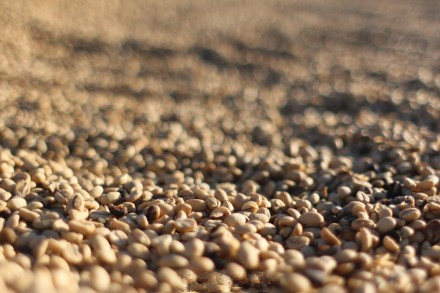
World Coffee Information Latin American caffeine climate warming is facing decline
Organic coffee in Latin America is under threat due to the spread of rust leaf disease at higher altitudes due to global warming, Taiwan's United News Network reported recently. For nearly six years, a fungus commonly known as "coffee rust" has killed a large number of coffee trees in Central America, so many that scientists believe that coffee harvests in the region could be reduced by as much as 40%. The culprit is what scientists say

Puerto Rico has a history of producing coffee for nearly 300 years. Why is it declining gradually?
Following Caf é (official Wechat account vdailycom) found that Puerto Rico, which has a history of producing coffee for nearly three hundred years, was one of the most productive regions in the world. Spanish explorers brought coffee from the French Louis XIV plantation to the island in 1736. The fame of Yao Konot's selection (Yaucono Selecto) was once with Kona and Kona of Hawaii

Those declining coffee bean growing areas (3)
Indonesia: the representative of Asia has no doubt that Indonesia was once the leading producer of established coffee in Asia. The best coffee growing areas in Indonesia are in Java, Sumatra and Sulawesi, and the main export markets are the European Union, the United States and Japan, which also reflects the excellent quality of coffee in the country. In the past few years, Indonesian coffee

The latest news of the world coffee industry: the decline of coffee cultivation in Costa Rica
According to the Costa Rican "financier" newspaper reported on December 14. The planting area of coffee in Colombia has decreased by 6.4% in the past 30 years. It was 89881 hectares in 1984 and only 84133 hectares remained in 2015. Coffee gardens have to give up their land to real estate, especially in metropolitan areas. At the same time, the changes in coffee prices in the world have gradually reduced the profits of coffee cultivation, which are all placed on the main side of the coffee garden.

Characteristics of La Souna Mantenin Coffee
In less than a decade of promotion by the local Ministry of Agriculture, the coffee variety Rasuna Rasuna has shown good quality. The quality, yield and resistance to common pests and diseases of coffee beans have always been excellent. In all categories, Indonesia Rasuna coffee beans coffee cup test quality is excellent. Wet processing to reduce acidity, Rasuna coffee beans have Sumanda

Coffee cultivation and export in Venezuela San Cristobal region
The coffee industry in Venezuela has been shrinking in recent years. The government encourages coffee cultivation by introducing new varieties and providing loans to farmers. Venezuelan coffee production accounted for more than 7% of global coffee production in the 19th century, but since the discovery of oil in the early 20th century, the coffee industry has been in decline. At present, Venezuelan coffee production accounts for less than 1% of the world's output.
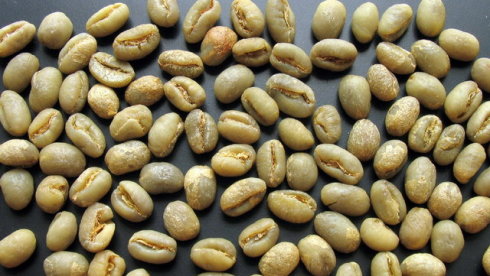
Tanzania Coffee Green Bean Kilimanjaro AA Black Plum Flavor Balanced Acidity Soft Mild
Political instability and pest infestation have disrupted Tanzania's coffee industry, leading to a decline in overall coffee levels and instability in quality, which in turn has led to lower prices, which usually result in further declines in the coffee industry. More notably, it is estimated that from 1969 to 1985 more than 12 per cent of the Arabica coffee grown in northern Tanzania was lost.

Development status of Mocha Coffee in Yemen
(1) the total output has continued to decline in recent years since 2001, and Yemeni coffee production has declined year by year due to various reasons. The annual output has dropped from 11906 tons in 2001 to 11608 tons in 2003, 11590 tons in 2004, to about 11000 tons in 2008. In recent years, despite the rising prices in the international coffee market, the coffee industry in Yemen has not boomed with it, but sharply.

High rainfall leads to a decline in the production of coffee beans in Wendu Wasuo, Indonesia.
Kaiping (official Wechat account vdailycom) found that high rainfall caused coffee production in Bondowoso to fall by 40 to 60 per cent in 2017 due to the opening of a small shop in Beautiful Cafe. On July 15th, Suyitno, director of the Rejo Tani cooperative in the town of Sukosari, said coffee bean production had dropped significantly this year. Last year, the yield per hectare reached 500 kg to 600 kg.

New situation of epidemic situation in Vietnam production of Robota in Vietnam has declined, and coffee prices have risen by 2022.
Coffee prices remain high until 2022, US Consumer News and Business Channel (CNBC) reported on September 15th that Vietnam's blockade due to the severe epidemic of COVID-19 may keep coffee prices relatively high until 2022. On Sept. 13, Vietnamese authorities announced that Vietnam's commercial center and Ho Chi Minh City, the epicenter of the new COVID-19 epidemic, had extended the blockade for two weeks. And Vietnam, um,
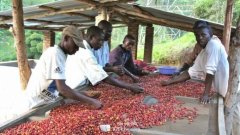
Yemen, a coffee-producing region in Asia
Mocha Mattari early Yemeni coffee was mainly exported from the port of Mocha, so the coffee that was later exported from here was named after Mocha. In Yemeni coffee, Mattari and Sanani are more famous, among which Matari tastes more full-bodied, with strong acidity and cocoa flavor, while Sanani has more
Introduction to Cameroon Coffee
According to the National Office of Cocoa and Coffee of Cameroon (ONCC), by the end of the coffee harvest year 2012 Coffee in 2012, there was a significant decline in coffee production in Robsta and stagnation in Arabica, with a total commercial coffee production of 16142 tons, a decrease of 21985 tons compared with the previous coffee harvest of 38127 tons.

Boutique Coffee in Guatemala Coffee region Vivette Nan Fruit
The extra-hard coffee beans here are full-grained, delicious and balanced, and the coffee made with them is pure and rich. Guatemala coffee once enjoyed a reputation as the best quality coffee in the world, but its quality also declined for a time. What is gratifying, however, is that its reputation is gradually being restored. In 1750, Father Jesuit introduced coffee trees to Guatemala, at the end of the 19th century.

Boutique Coffee in Guatemala Coffee region Vivette Nan Fruit
The extra-hard coffee beans here are full-grained, delicious and balanced, and the coffee made with them is pure and rich. Guatemala coffee once enjoyed a reputation as the best quality coffee in the world, but its quality also declined for a time. What is gratifying, however, is that its reputation is gradually being restored. In 1750, Father Jesuit introduced coffee trees to Guatemala, at the end of the 19th century.

Boutique Coffee in Guatemala Coffee region Vivette Nan Fruit
The extra-hard coffee beans here are full-grained, delicious and balanced, and the coffee made with them is pure and rich. Guatemala coffee once enjoyed a reputation as the best quality coffee in the world, but its quality also declined for a time. What is gratifying, however, is that its reputation is gradually being restored. In 1750, Father Jesuit introduced coffee trees to Guatemala, at the end of the 19th century.
What is the reason for the decline of coffee in Puerto Rico?
Following Cafe (Wechat official account vdailycom) found that Fairview Cafe opened a small shop of its own. What is the reason for the decline of coffee in Puerto Rico? Puerto Rico has been in the news lately because its government, which has been saddled with $70 billion in debt for years, officially defaulted in August. Its awkward situation originated from the Spanish-American War of 1898.
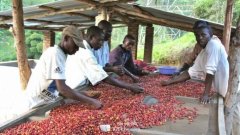
World boutique coffee producing area Asian coffee producing region Yemen
Mocha Mattari early Yemeni coffee was mainly exported from the port of Mocha, so the coffee that was later exported from here was named after Mocha. In Yemeni coffee, Mattari and Sanani are more famous, among which Matari tastes more full-bodied, with strong acidity and cocoa flavor, while Sanani has more